


 Cart
Cart
 sales@molnova.com


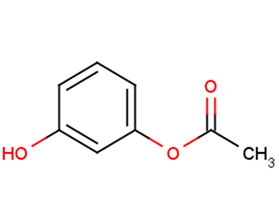
Resorcin monoacetate
CAS No. 102-29-4
Resorcin monoacetate( —— )
Catalog No. M22104 CAS No. 102-29-4
Resorcinol monoacetate is an antiseptic and a disinfectant, is a chemical intermediate for the production of many other pharmaceuticals, and can be used to treat acne, seborrheic dermatitis, eczema, psoriasis, and other skin disorders.
Purity : >98% (HPLC)
 COA
Datasheet
HNMR
HPLC
MSDS
Handing Instructions
COA
Datasheet
HNMR
HPLC
MSDS
Handing Instructions
| Size | Price / USD | Stock | Quantity |
| 100MG | 43 | In Stock |


|
| 200MG | Get Quote | In Stock |
|
| 500MG | Get Quote | In Stock |
|
| 1G | Get Quote | In Stock |
|
Biological Information
-
Product NameResorcin monoacetate
-
NoteResearch use only, not for human use.
-
Brief DescriptionResorcinol monoacetate is an antiseptic and a disinfectant, is a chemical intermediate for the production of many other pharmaceuticals, and can be used to treat acne, seborrheic dermatitis, eczema, psoriasis, and other skin disorders.
-
DescriptionResorcinol monoacetate is an antiseptic and a disinfectant, is a chemical intermediate for the production of many other pharmaceuticals, and can be used to treat acne, seborrheic dermatitis, eczema, psoriasis, and other skin disorders.
-
In Vitro——
-
In Vivo——
-
Synonyms——
-
PathwayOthers
-
TargetOther Targets
-
RecptorOthers
-
Research Area——
-
Indication——
Chemical Information
-
CAS Number102-29-4
-
Formula Weight152.15
-
Molecular FormulaC8H8O3
-
Purity>98% (HPLC)
-
SolubilityDMSO: 10 mM
-
SMILESCC(=O)OC1=CC=CC(=C1)O
-
Chemical Name——
Shipping & Storage Information
-
Storage(-20℃)
-
ShippingWith Ice Pack
-
Stability≥ 2 years
Reference
1. Bull Am Pharm Assoc. 1946 Jan-Feb;14:35.
molnova catalog



related products
-
Marrubiin
Marrubiin is a natural product.
-
VPC-18005
VPC-18005 is a luciferase inhibitor. VPC-18005 inhibits ERG-induced transcription and interacts directly with the ERG-ETS domain thereby disrupting the ERG binding to DNA.
-
Bis-Tos-PEG4
Bis-Tos-PEG4 (PROTAC Linker 16) is a PEG-based PROTAC linker can be used in the synthesis of PROTACs.
